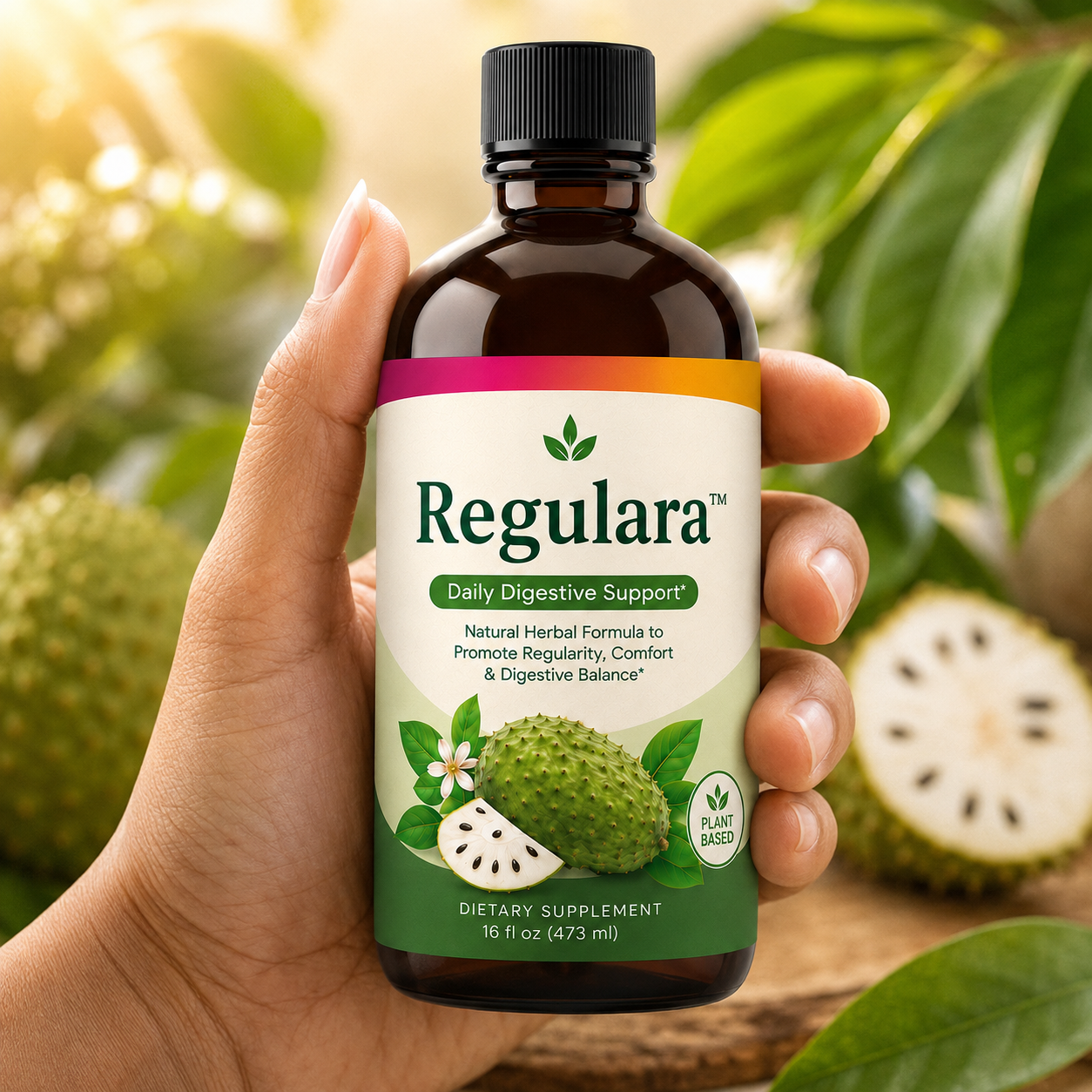
Regulara™
Finally regular. Every single morning.
- Daily regularity without the harsh laxative crash†
- A flatter, lighter stomach as bloating eases†
- Steady energy and clearer focus through the afternoon†
- 17 bitter herbs, third-party lab tested, made in the USA
You've unlocked FREE shipping
Works with your body, not against it — no dependency cycle, no 3am urgency†

How it works
Bitter is the signal your gut is missing
Modern food is engineered to be sweet, so the bitter receptors that cue digestion rarely get used. Regulara™ delivers that bitter signal twice a day to support your body's own digestive rhythm.†

The formula
17 herbs, one tablespoon, twice a day
Soursop, black seed, sea moss, ashwagandha and thirteen more traditional botanicals in a liquid base your body can put to work quickly. Third-party lab tested, made in the USA.†

What to expect
Day 3 you notice. Month 3 it's automatic.
Most people report a lighter, less bloated morning within the first week.† Consistency is what makes regularity feel effortless rather than something you have to plan around.
Regulara™ vs. Old-School Laxative Teas & Fiber Powders
| Regulara™ | Laxative teas & fiber powders | |
|---|---|---|
| Primary action | Supports your own digestive signalling† | Forces a bowel movement |
| Daily cost | $1.83/day | $2.33/day |
| Dependency risk | No stimulant laxatives | Habit-forming senna blends |
| Bloating support | Yes — daily debloat support† | Often worsens bloating |
| Formula depth | 17 bitter herbs | 1–3 ingredients |
| Guarantee | 90-day empty-bottle | 14–30 days, unopened only |
What verified buyers are saying

Danielle R.
Aug 12, 2026
“After a couple of weeks with Serene Herbs Soursop Bitters, there is a clear difference in how light and less bloated the stomach feels, especially after heavier meals. The herbal blend with soursop, black seed, moringa, and ginger really does seem to support digestion and regularity, and there is a mild but welcome bump in overall energy during the day. The tradeoff is the flavor: it is very strong, bitter, and a bit medicinal so taking it straight is not pleasant at all. Mixing the dose into juice or a smoothie helps, but the taste still takes getting used to. Overall, it earns 4 stars for real digestive support and energy benefits.”

Marcus T.
Aug 8, 2026
“So after about 2 weeks of use, it starts to work a lot better. I was taking it without other supplements last week (only drinking mint and turmeric honey tea) and it worked within a day! It just needs to build up in your system I'm guessing. Great buy! 👍”

Amber L.
Jul 29, 2026
“It seems to be working... I take it with a lot of other different supplements right now, so I'm not sure how great it works on it's own. The taste and smell is definitely bitter/strong, but I mix it with juice or coconut milk to make it taste better. It didn't make me go to the restroom right away like others say. My waste looks slimmer the morning after taking it lately! Bottle is plastic, and a little smaller than I expected.”

Jennifer L.
Jul 15, 2026
“I've tried every fiber powder and tea on the shelf. Regulara is the first thing that gave me consistent mornings without the cramping or urgency. I mix it into my juice and actually look forward to it now.”

Robert M.
Jun 30, 2026
“Bought the family pack after my wife and I both noticed we were less bloated within the first week. The travel dropper is a nice touch. Already reordered.”
50,000+ Bottles Shipped
Made in a GMP-Certified US Facility
90-Day Empty-Bottle Guarantee
Questions, answered
Many people notice a difference in the first 3–5 days, but bitters work best cumulatively. Give it a full 30 days of consistent use before judging results.†